A rent increase of 3 to 5% per year is typical and generally accepted by renters who are happy with the property and the landlord.
Always check your local rent control laws before raising rent. Some cities and states limit how much you can increase and how much notice you must provide.
Written notice is required in most states, typically 30 to 60 days before the increase takes effect.
The cost of losing a good renter (vacancy, turnover, screening, cleaning, repairs) almost always exceeds the revenue from an aggressive rent increase.
Communicating the increase early, clearly, and with a reason makes renters far more likely to stay.
Raising rent is one of the most uncomfortable parts of being a landlord. You know your costs are going up. Property taxes, insurance premiums, maintenance expenses, and market rates all trend upward over time. But you also know that the renter in your unit is reliable, pays on time, takes care of the property, and causes no problems.
So how do you raise the rent without pushing that person out the door?
The answer is a combination of timing, communication, and math. A well-handled rent increase keeps your income in line with the market while preserving the relationship with a renter you'd rather not replace. A poorly handled one costs you far more than the extra $50 or $100 per month you were trying to gain.
When to Raise Rent
The right time to raise rent depends on your lease structure and the local market.
At lease renewal. This is the most common and least disruptive time. Your renter's lease is expiring, and you're offering a renewal at a new rate. Both sides have time to decide, and the increase is built into the next lease term.
After property improvements. If you've upgraded the kitchen, replaced flooring, installed a new HVAC system, or made other improvements that increase the property's value, a rent increase at the next renewal is reasonable and easier for renters to accept. They can see the value they're getting.
When the market moves. If comparable rentals in your area have increased significantly since you last set your rent, your pricing may be below market. Staying too far below market rate means you're leaving money on the table every month. Pull fresh comps before deciding. Our guide on how to set the right rent price walks through the research process.
On an annual schedule. Some landlords build a small annual increase into the lease itself (often tied to a percentage or a fixed dollar amount). This sets expectations from day one and avoids the awkward "surprise" conversation at renewal time.
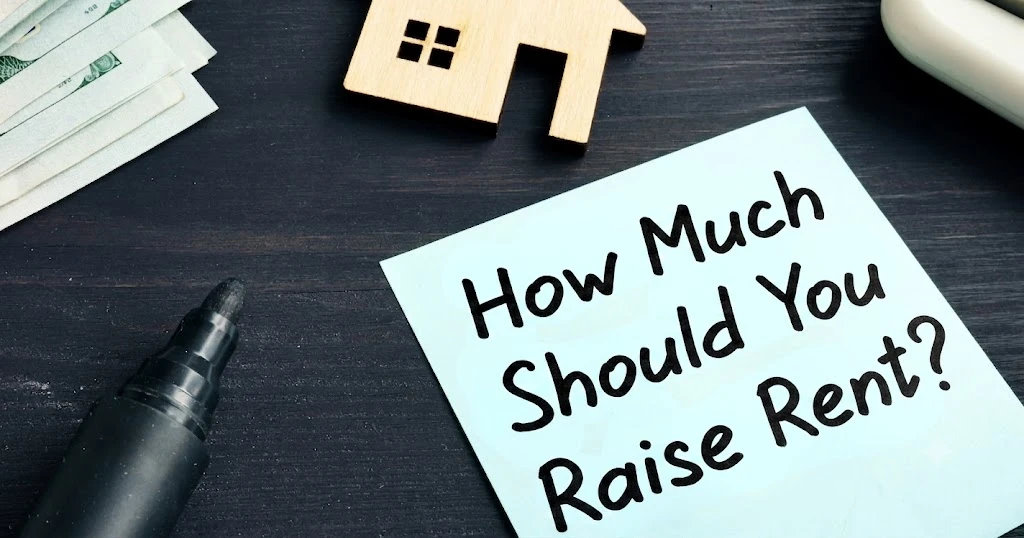
How Much Should You Raise Rent?
The size of your increase matters more than the fact that you're raising rent. A reasonable increase keeps good renters in place. An aggressive one prompts them to look for alternatives.
3 to 5% per year is the range most renters accept without serious pushback. On a $1,500 monthly rent, that's $45 to $75 per month, or $540 to $900 per year. For most renters, that's the cost of staying in a place they already like versus the hassle and expense of moving.
Above 5% starts to trigger move-out decisions, especially if renters feel the increase isn't justified by improvements or market conditions. If you need a larger increase to reach market rate, consider phasing it in over two renewals instead of applying it all at once.
Below 3% is a goodwill gesture. It signals to your renter that you value them and aren't trying to squeeze every dollar. This can be strategic if your renter is excellent, vacancy rates in your area are rising, or you'd rather lock in a reliable person for another year than risk turnover.
Before deciding on a number, calculate the value of the increase relative to the cost of losing the renter. If a $75 per month increase generates $900 per year in additional income but causes your renter to leave, the vacancy alone (one to two months of lost rent, plus turnover costs) wipes out that gain and then some.
Check Your Local Rent Control Laws First
Before you raise rent, confirm whether your property falls under any rent control or rent stabilization rules. In areas with these laws, there are legal limits on how much you can increase rent and specific procedures you must follow.
States and cities with some form of rent control include California, New York, Oregon, New Jersey, Maryland, Washington, D.C., and parts of other states. Rules vary widely. In some areas, annual increases are capped at a fixed percentage (often tied to inflation). In others, rent stabilization applies only to buildings built before a certain year or with a certain number of units.
"Good cause" eviction laws in some jurisdictions also restrict your ability to non-renew a lease if the renter doesn't agree to an increase. These laws are evolving quickly, so check your state and local regulations before sending any notice.
If your property is not in a rent-controlled area, you generally have the right to raise rent to any amount at the end of a lease term, as long as you provide proper written notice and the increase isn't retaliatory or discriminatory.
How to Give Proper Notice of a Rent Increase
Every state has rules about how much notice you must give before a rent increase takes effect. The most common requirements are:
30 days for month-to-month leases in most states.
60 days in states like California (for increases above 10%) and for some lease types.
90 days in a few jurisdictions for larger increases.
Your notice should be in writing and include the current rent amount, the new rent amount, the effective date of the increase, and how the renter can confirm their renewal or provide notice to vacate. Keep a copy for your records.
Even if your state only requires 30 days, giving 60 or more days of notice is a courtesy that good renters appreciate. It gives them time to plan, budget, and make a decision without feeling pressured. That extra time often makes the difference between a renter who stays and one who starts looking.
How to Communicate a Rent Increase to a Good Renter
The way you communicate a rent increase matters as much as the increase itself. A good renter who feels respected and informed will handle a modest increase very differently from one who feels blindsided.
Be direct. Don't bury the increase in a long email or add unnecessary apologies. State the new rent, the effective date, and the reason clearly.
Give a reason. Renters accept increases more easily when they understand why. Property taxes went up, insurance premiums increased, you made improvements to the unit, or market rates in the area have risen. You don't need to open your books, but a one-sentence explanation goes a long way.
Acknowledge the relationship. If your renter has been reliable, say so. Something simple like "We appreciate you taking great care of the property and want to continue the arrangement" reinforces that you value them as a renter, not just as a source of rent.
Offer something in return when possible. A small gesture alongside the increase can smooth the conversation. This could be a minor upgrade (new blinds, a fresh coat of paint in one room, or the replacement of an aging appliance), a longer lease term at the new rate, or flexibility on the effective date.
Don't negotiate over text. If you sense resistance, offer a phone call or an in-person conversation. Tone gets lost in text-based communication, and a quick conversation can resolve concerns that would escalate over email.
What to Do If a Good Renter Pushes Back
If a renter you want to keep pushes back on the increase, don't default to "take it or leave it." Run the numbers first.
Calculate the cost of turnover. Losing a renter means vacancy (typically one to two months of lost rent), turnover costs (cleaning, minor repairs, painting), marketing and listing costs, and the time and expense of screening new applicants. For most properties, turnover costs $2,000 to $5,000 or more. Compare that to the annual value of the increase you're asking for.
Consider a compromise. If your renter pushes back on a $ 75-per-month increase, meeting in the middle at $40 to $50 per month still raises your income while keeping a reliable person in place. Over 12 months, the difference between $75 and $50 is $300. The cost of one month of vacancy is $ 1,500 or more.
Offer a longer lease. Some renters will accept an increase more willingly if they get stability in return. Offering a two-year lease at the new rate locks in your income and removes the uncertainty of another negotiation next year.
Know when to hold firm. If your rent is significantly below market and the increase is reasonable, it's okay to hold your ground. Just do it respectfully and give adequate notice so the renter has time to make their decision.
For more on the math behind keeping good renters versus replacing them, see our guide on reducing renter turnover.
When NOT to Raise Rent
There are situations where keeping rent flat is the smarter financial move.
Your renter is excellent and already below market. A renter who pays on time, maintains the property, and causes no issues is worth more than the market rate. The stability and predictability they provide have real financial value. A small gap between your rent and the market rate is the price you pay for that.
Vacancy in your area is high. If comparable properties near yours are sitting empty, an increase could push your renter into one of those vacancies. In a soft market, retention beats revenue.
You just completed a disruptive repair. If your renter dealt with weeks of construction noise, limited access to parts of the unit, or other major disruptions, raising rent at the next renewal feels tone-deaf. Give it a cycle before increasing.
Your renter is experiencing financial difficulties. If you know your renter is dealing with a temporary hardship and they've been transparent about it, holding rent steady for a renewal can build long-term loyalty. This is a judgment call, not a rule.
Frequently Asked Questions
Can a landlord raise rent in the middle of a lease?
In most cases, no. Rent increases typically take effect at the end of a lease term or during the renewal process. If your renter is on a fixed-term lease (12 months, for example), you generally cannot increase the rent until that term expires.
Month-to-month tenancies allow for rent increases with proper written notice, usually 30 to 60 days’ notice.
How much notice do I need to give for a rent increase?
It depends on your state and the type of lease. Most states require 30 days of written notice for month-to-month leases. Some states require 60 or 90 days for larger increases or specific lease types.
Always check your state and local laws for the exact requirement. Even if the minimum is 30 days, giving 60+ days is a good practice for retaining renters.
What if my renter refuses the increase and won’t leave?
If your renter is on a month-to-month lease and refuses the increase, you can choose not to renew the tenancy with proper notice (unless you’re in a jurisdiction with “good cause” eviction laws).
If they’re on a fixed-term lease, the current rent remains in effect until the lease expires. Never attempt to force a renter out through intimidation, withholding services, or changing locks. Follow your state’s legal process.
Is there a maximum rent increase I can charge?
In areas without rent control, there is generally no legal cap on how much you can raise rent. However, increases must not be retaliatory (in response to a renter exercising their legal rights) or discriminatory (based on protected characteristics).
In rent-controlled areas, increases are capped at a specific percentage, often tied to the Consumer Price Index or a fixed annual limit set by the local housing authority.
The Bottom Line
Raising rent on good renters is a balancing act between protecting your rental income and preserving a relationship that has real financial value. The most effective approach is to raise rent modestly and consistently (3 to 5% per year), communicate the increase early and clearly, check your local laws before sending notice, and always weigh the cost of the increase against the cost of losing a reliable renter.
A good renter who stays for five years at a fair rent is worth more than a revolving door of renters who each pay a slightly higher rate but cost you vacancy, turnover, and screening expenses every 12 to 18 months.
Taylor Wilson
Founder
Taylor Wilson is the Founder of Rent with Clara, a modern renter screening platform built to streamline the rental application process. As both a renter and an independent landlord, Taylor sits on both sides of the lease, and built Clara to give renters control over what they share while giving landlords reliable and verified applications.
Read Articles
1099 Tenant Proof of Income: Complete Verification Guide For Landlords


.png)

.png)
.png)

.png)

.png)


